.jpg?width=88&height=88&name=BennyJ%20(2).jpg)
Author
Ben Jastatt
Sr. Director, Marketing
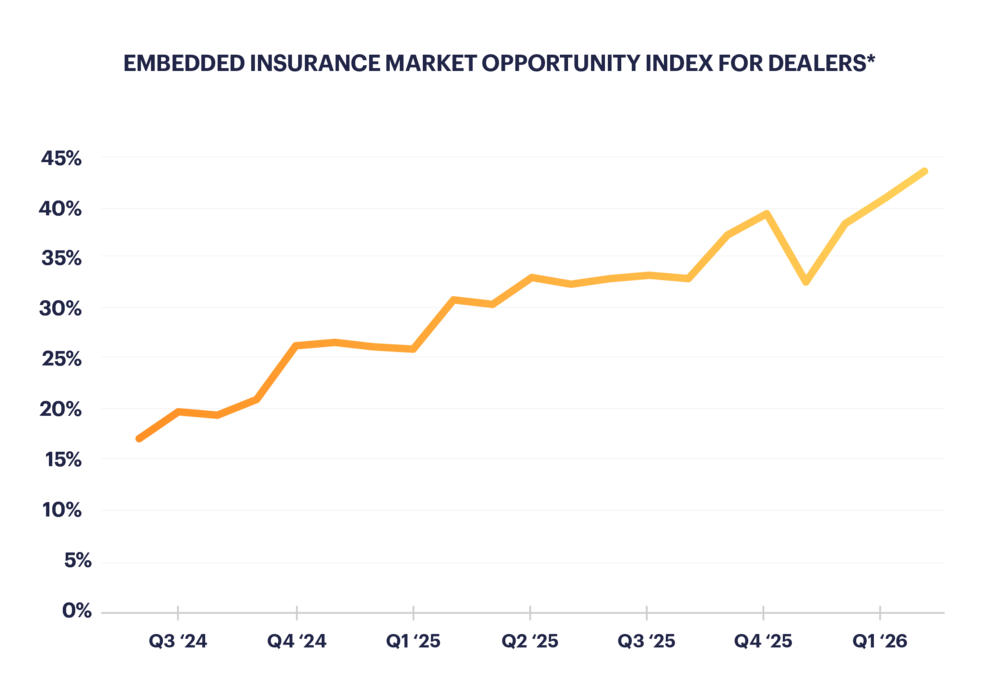
The embedded insurance market opportunity for dealers reached its highest level in Q1 2026, the highest level observed in the reporting period. This growth reflects improving carrier appetite, expanded quote availability, and increasing dealer adoption. As insurance becomes easier to secure during the vehicle purchase process, more buyers are successfully obtaining coverage without delaying delivery.
For dealerships, this trend reinforces insurance as a reliable operational lever. When insurance is introduced earlier in the deal, dealers are better positioned to reduce friction, stabilize affordability, and keep transactions moving forward. Embedded insurance is transitioning from an opportunistic add-on to a consistent part of the modern retail workflow, helping dealers improve outcomes while maintaining a smoother customer experience. Insurance opportunity continues expanding into 2026.
Dealerships where customers saw insurance quotes during the purchase process saw a 22% lift in F&I gross, adding an average of $343 more per transaction compared to deals with no insurance engagement.
When customers went a step further and purchased insurance, the impact increased substantially. These deals delivered a 35% increase in F&I gross, or $564 more per transaction, reinforcing insurance engagement as one of the most dependable ways to increase profitability without adding friction to the deal.
As affordability pressures remain a factor in the car-buying process, insurance savings can directly improve buying power and support stronger F&I outcomes.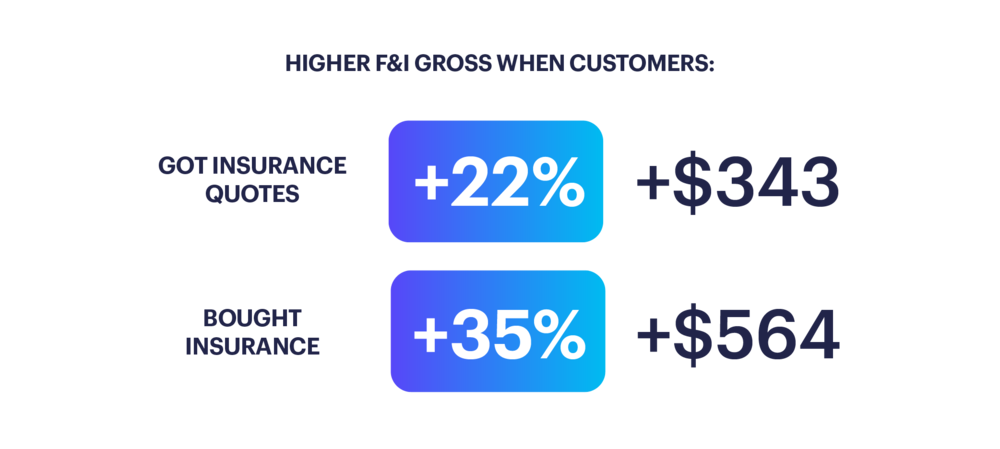
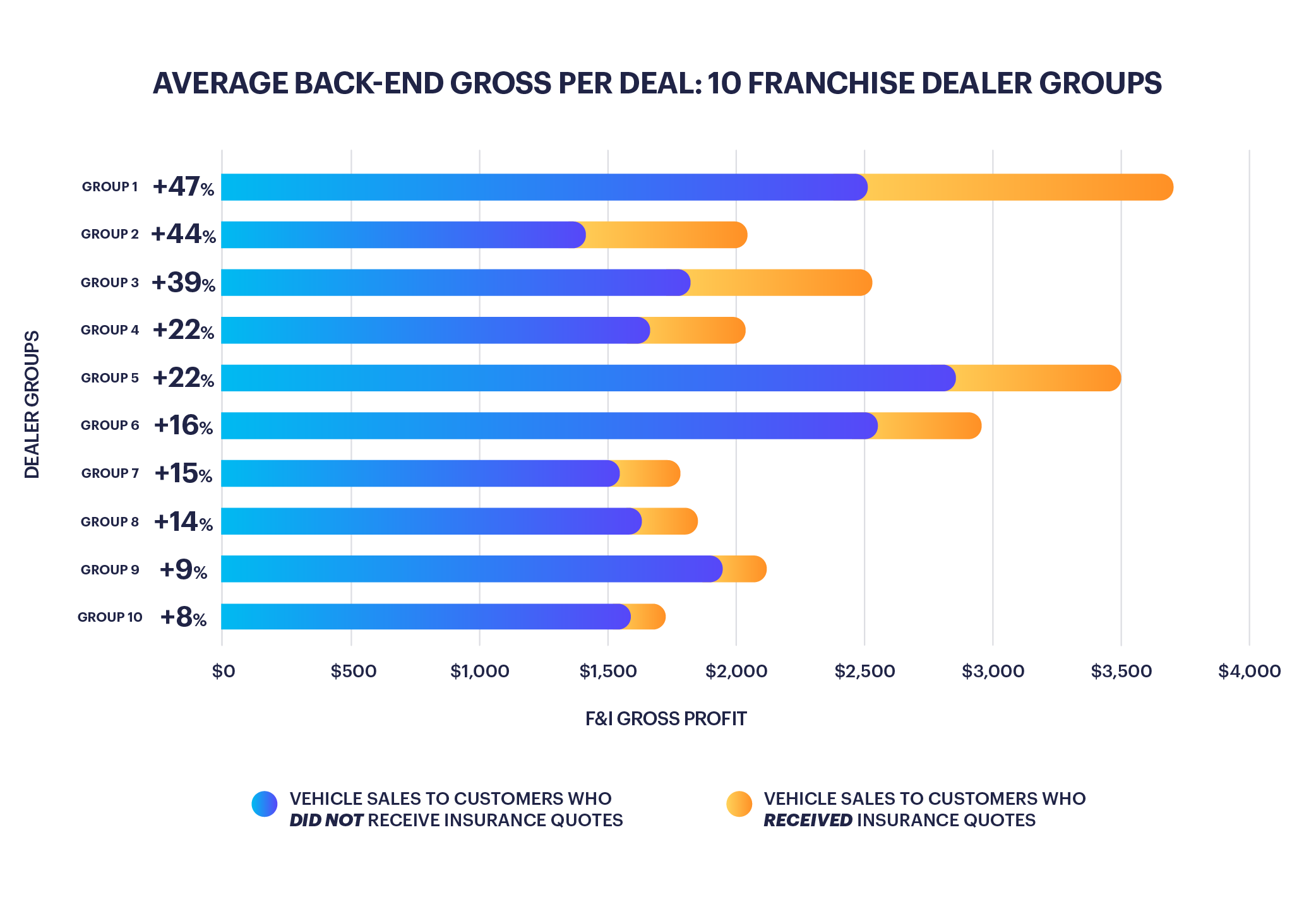
High-engagement dealerships in the Polly network once again outperformed on back-end gross when insurance was part of the deal. Among the top 10 high-engagement dealerships, F&I lift ranged from mid-single digits to more than 40%.
The results reinforce a trend observed across prior quarters: dealerships that consistently incorporate insurance into the sales process tend to see more predictable financial outcomes. Rather than producing isolated gains, embedded insurance appears to compound over time as adoption becomes part of the standard workflow.
For top-performing dealerships, insurance is increasingly integrated as a routine step — not an exception — helping raise the overall F&I ceiling without slowing the transaction.
Insurance availability continued improving in Q1 2026, extending the normalization trend that began in 2024. The share of buyers struggling to obtain insurance declined to 3% in Q4 2025, falling further to 2% in Q1 2026.
These levels are significantly lower than disruption periods observed in 2023, when more than 15% to 20% of buyers experienced difficulty securing coverage. Increased insurer participation and broader underwriting appetite helped restore access to competitive quotes for most customer segments.
As availability improves, insurance-related delivery delays become less common. This reduces friction late in the transaction and helps dealers maintain momentum through the finance process.
While challenges remain for certain risk profiles and geographies, the broader trend indicates a healthier insurance market, with improved accessibility supporting smoother dealership operations.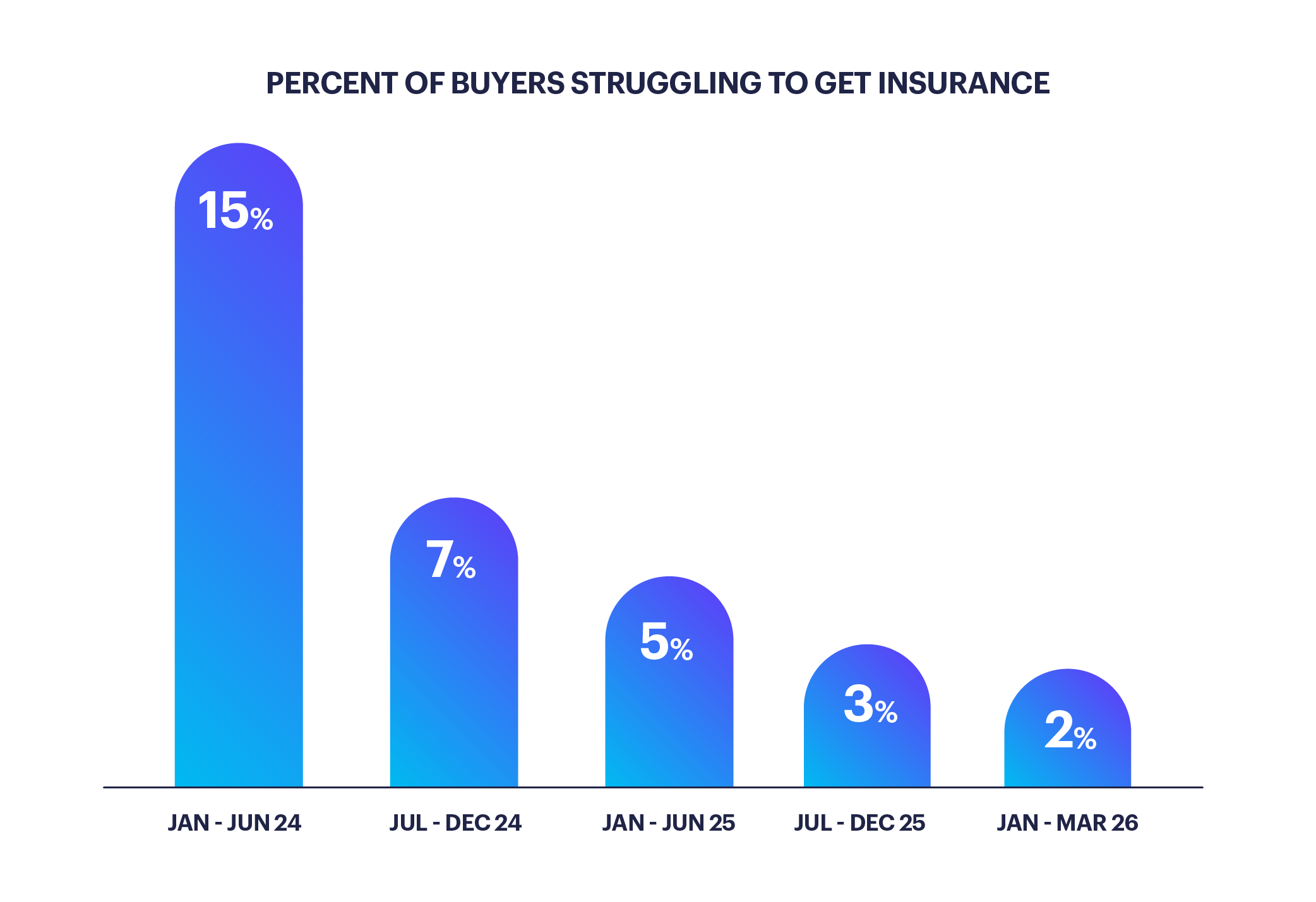
Median monthly insurance quotes continued easing into early 2026, declining from a high of $202 in Q4 2024 to $181 in Q3 2025, then falling further to $174 in Q4 2025 and $168 in Q1 2026.
This continued moderation follows several years of rapid increases and suggests pricing conditions are stabilizing. While affordability pressures remain, the pace of change has slowed, helping reduce volatility in total cost of ownership for car buyers.
More consistent pricing can make it easier for dealerships to manage payment expectations and avoid last-minute surprises during the finance process. Even modest differences in insurance premiums can materially affect buying power, making insurance an increasingly important variable in structuring the deal.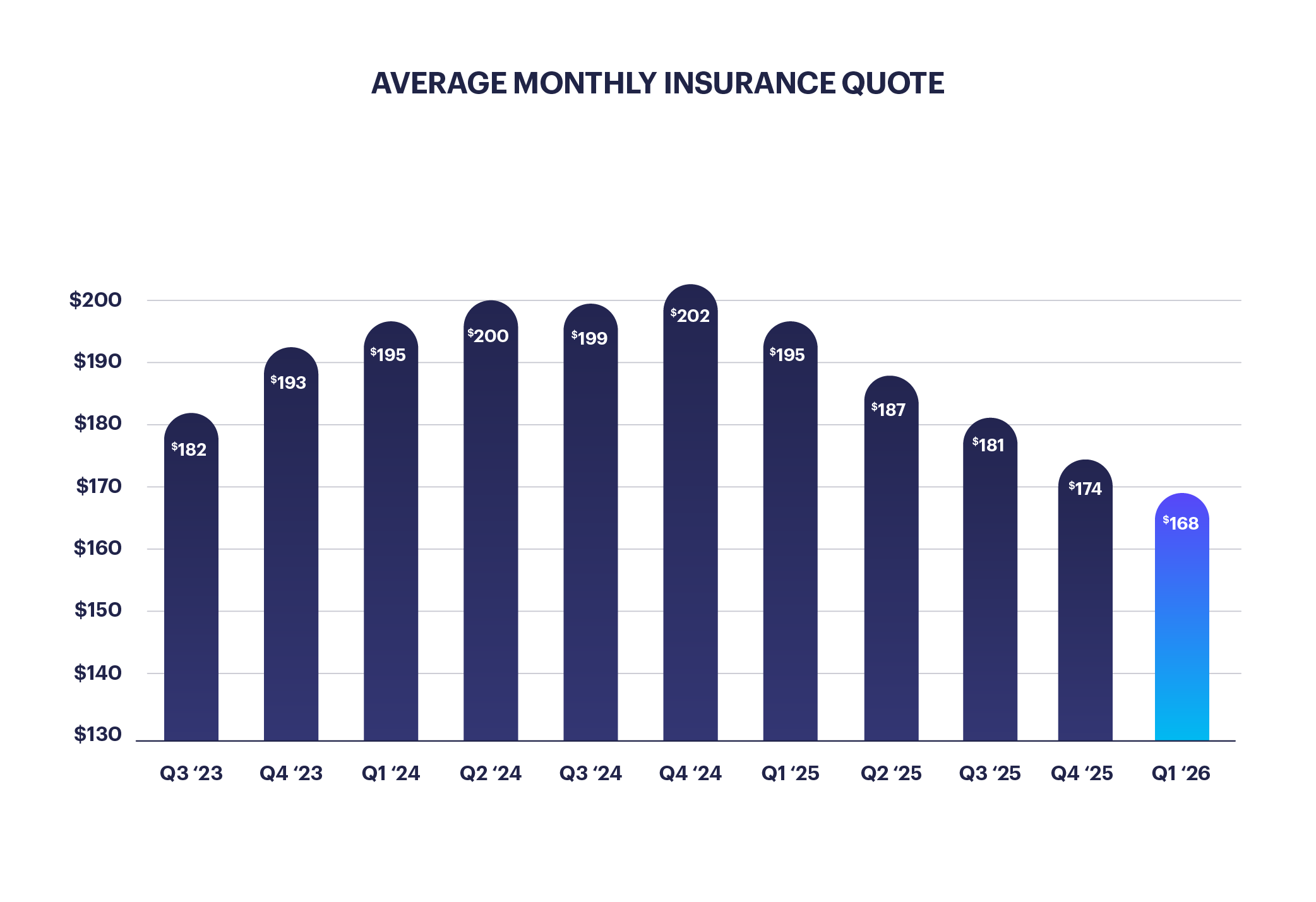
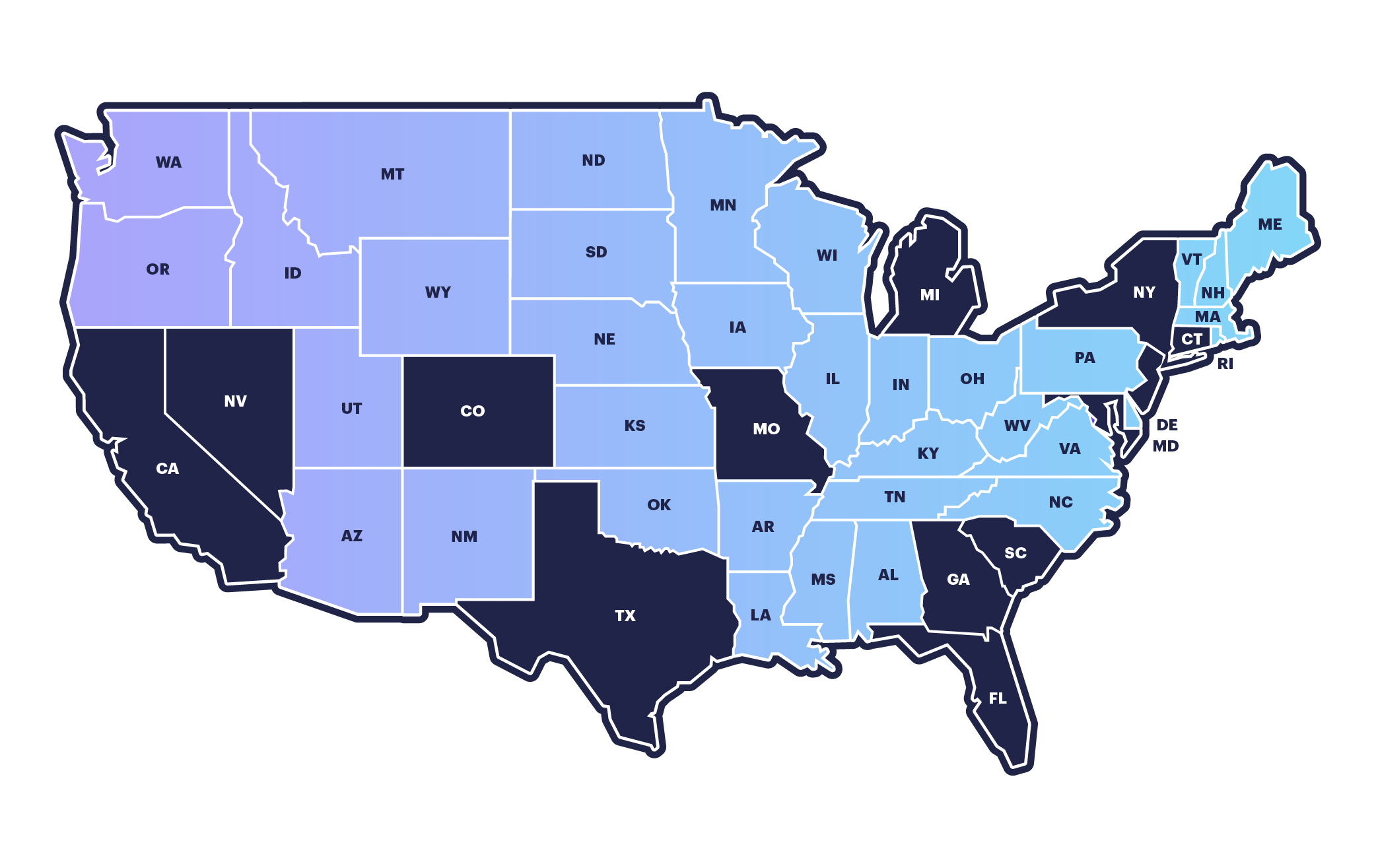
Despite national rate stabilization, several states continued to post insurance premiums well above the national median of $168 per month in Q1 2026.
Nevada — $273
New York — $262
Georgia — $258
California — $228
Delaware — $224
In these regions, insurance premiums remain materially higher than the national median, creating localized affordability challenges that can impact vehicle purchasing decisions.
Elevated premiums can add hundreds of dollars to a buyer's monthly cost calculation, increasing the likelihood of sticker shock or delayed deliveries. Geographic variability remains one of the largest factors influencing insurance affordability.